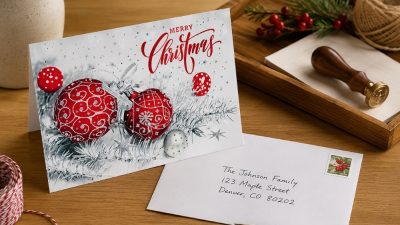
Most Christmas cards get a quick glance, a polite smile, and a one-way trip to the recycling bin. A few end up propped on a desk or pinned to a bulletin board, staying visible for weeks. What separates the keepers from the toss pile? Almost always, the message inside.
A beautifully designed card with a generic “Season’s Greetings from our team” rarely earns a second look. But a card that names something specific, acknowledges the relationship, or simply sounds like a real person wrote it? That one sticks around. For businesses sending cards to clients, employees, and partners, a Christmas card message that gets kept is more than a nice moment. A card that lingers on someone’s desk keeps your company top of mind well into the new year.
What Makes a Christmas Card Message Worth Keeping?
The difference between a forgettable card and a memorable one usually comes down to three things: specificity, warmth, and brevity.
Specificity means referencing something real. A client you partnered with on a major launch. An employee who stepped up during a tough quarter. When you name the moment, the recipient knows the card was meant for them and not mass-produced for a mailing list.
Warmth sounds obvious, but plenty of business Christmas card messages land somewhere between a legal disclaimer and a press release. Write the way you would speak to someone at a holiday lunch: friendly, gracious, and human.
Brevity matters because no one reads a full paragraph inside a card. Two to four sentences is the sweet spot. Lead with gratitude, add one personal detail, and close with a warm wish for the season ahead.
For more inspiration on proven holiday greetings, browse popular Christmas card sayings worth sharing.
Which Christmas Card Message Ideas Work Best for Clients?
Clients are the lifeblood of your business, and a holiday card is one of the easiest ways to reinforce that relationship. The best Christmas card message ideas for clients follow a simple formula: thank the client, acknowledge something specific, and wish them well.
A gratitude-first message might read: “Working with you has been one of the highlights of our year. Wishing you and your team a wonderful holiday season and a strong start to the new year.”
A milestone-based message could say: “Celebrating five years of working together feels like the perfect reason to raise a glass. Happy holidays to you and yours.”
A forward-looking message works well too: “We are looking ahead to another great year of partnering with you. Wishing you peace, joy, and well-deserved time off.”
Each one names the relationship. Each one sounds like a person talking, not a marketing department composing. And none of them run longer than a few lines.
Pair a message like that with a premium card featuring sculpted embossing or foil accents from Gallery Collection, and the combination of personal words and quality presentation creates something your client will want to keep.
How Do You Write a Christmas Card Message Employees Will Value?
Holiday cards are one of the most overlooked tools for employee morale. An email blast wishing everyone “happy holidays” gets skimmed and deleted. A physical card with a personal note goes on the desk, the cubicle wall, or the home fridge.
Writing a Christmas card message for employees means making each person feel seen. A single sentence that names a contribution or quality you appreciate means more than a hundred generic well-wishes.
For a team leader: “Your leadership made a real difference during a challenging year. Enjoy a well-earned break with the people who matter most.”
For a newer hire: “We are so glad you joined the team. Looking forward to building great things together in the new year.”
For a long-tenured employee: “Twenty years and counting. Your dedication has shaped who we are as a company. Wishing you a joyful holiday season.”
Each message takes about thirty seconds to write. That small gesture builds loyalty and morale in ways a year-end bonus email simply cannot match. Browse top choices for Christmas card messages to spark ideas you can tailor to your team.
What Should You Write in a Christmas Card to Make It Memorable?
The cards people keep share something in common. Every one of them feels personal. Not a corporate “we deeply value your business” kind of personal, but specific in a way that proves someone stopped and thought before writing.
Here is a formula that works across any business relationship.
Start with a name. “Dear Sarah” beats “Dear Valued Client” every single time.
Add one true thing. One sentence about a project you worked on, a moment you shared, or a quality you admire. Keep the language plain and direct.
Close with a seasonal wish. “Hope you have a wonderful holiday with your family” hits harder than a three-line corporate sentiment.
Pair your message with a Christmas card printed on premium paper with elegant foil details, and the full experience signals care and professionalism. When the message and the presentation work together, the card becomes more than seasonal mail. Your card becomes a tangible reminder that the relationship matters.
Can You Personalize a Christmas Card Message at Scale?
Sending hundreds of cards does not mean every message has to sound robotic. Smart personalization at scale comes down to segmenting your list and layering in one custom line per card.
Break your holiday card list into groups: long-term clients, newer clients, employees, and vendors. Write a strong two-sentence base message for each group. For your most important contacts, handwrite one additional line that references something specific.
Even a short handwritten note at the bottom of a printed sentiment makes a card feel personal rather than obligatory. Something as simple as “Looking forward to the Johnson project next quarter” or “Thanks for always bringing energy to Monday meetings” goes a long way.
The card itself does heavy lifting here too. When you choose a card with your company name or logo and a customized interior sentiment, the presentation feels polished before the recipient reads your note. Personalized Christmas cards keep us connected to the people who matter most in business, and the effort shows.
Plan your orders early. Cards that arrive in the first two weeks of December earn more attention than stragglers showing up between Christmas and New Year’s. Order in late October or early November, and your timing will be right.
For a deeper look at how Christmas cards can start meaningful business conversations, the value stretches well beyond a holiday greeting.
Frequently Asked Questions
Aim for two to four sentences. A short, specific message feels more personal than a long, generic one. Most recipients appreciate a warm greeting that respects the moment without running long.
A combination works best. Use a printed sentiment as your base, then add a brief handwritten note for key contacts. Even one personal line makes the card feel individually crafted.
Mail your cards in early December, so recipients receive them while the season is building. Cards that arrive before mid-December tend to get the most visibility and attention.
Skip sales pitches, promotional codes, and anything that reads like marketing copy. Avoid overly religious language unless you know the recipient’s preferences. Keep the focus on appreciation rather than selling.
Absolutely. A card printed on quality paper with detailed embossing, foil accents, and a lined envelope signals care and attention. Recipients are far more likely to keep a card that looks and feels exceptional.