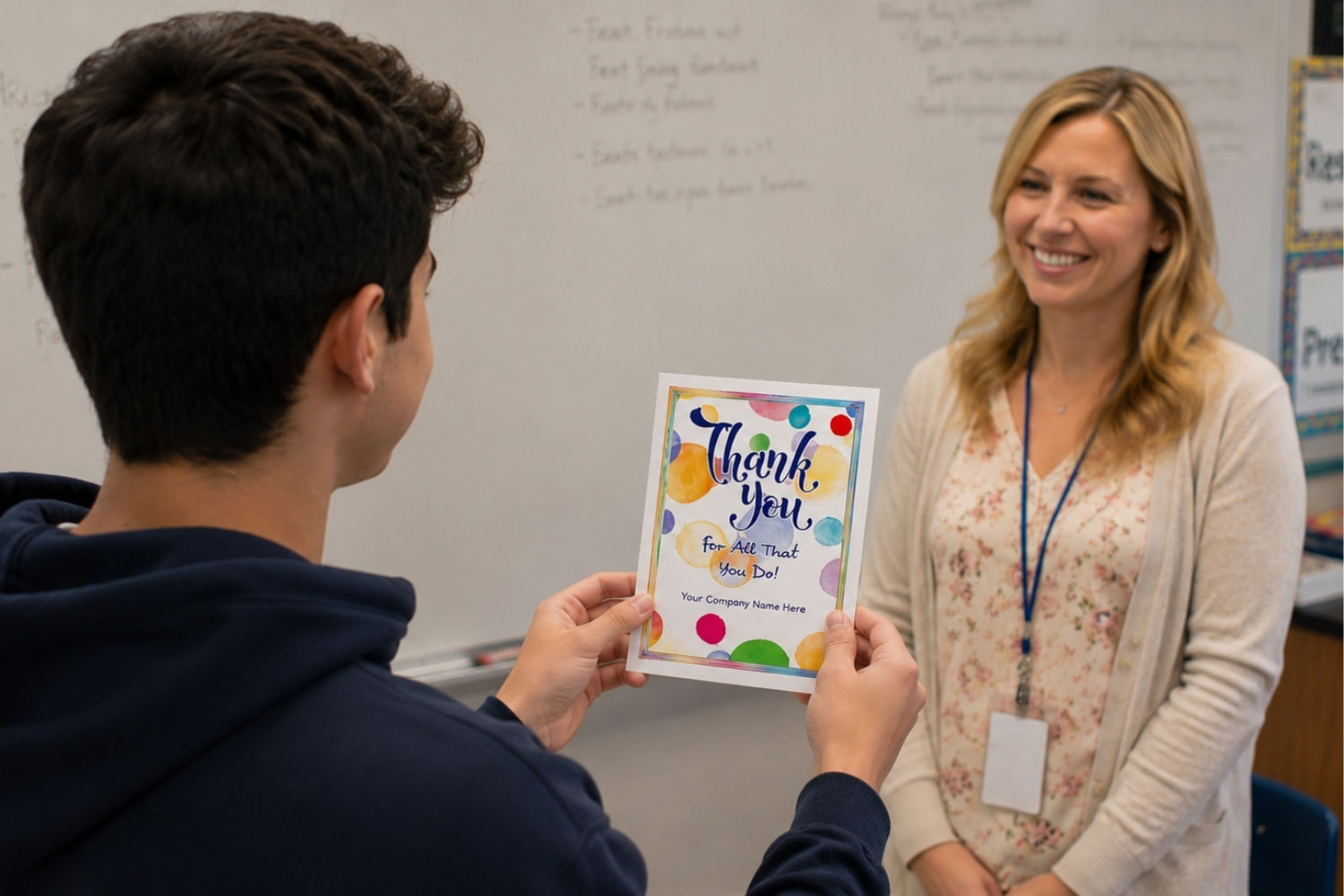
A handwritten card can say more than a hundred emails. When you sit down to write a teacher appreciation message, the goal is simple. You want that teacher to know their work matters and that someone noticed. Whether you are a parent, a student, or a school administrator, the right words in a card or note can turn an ordinary day into a memorable one.
Most people freeze when the pen hits the paper. So let’s fix that with a practical guide to writing teacher appreciation messages that feel genuine and worth keeping.
Why Do Handwritten Teacher Appreciation Cards Still Matter?
In a world full of quick texts and group emails, a physical card stands apart. A teacher can pin it to a bulletin board, tuck it inside a desk drawer, or prop it up where it stays visible for weeks. That kind of staying power is hard to match with a digital message.
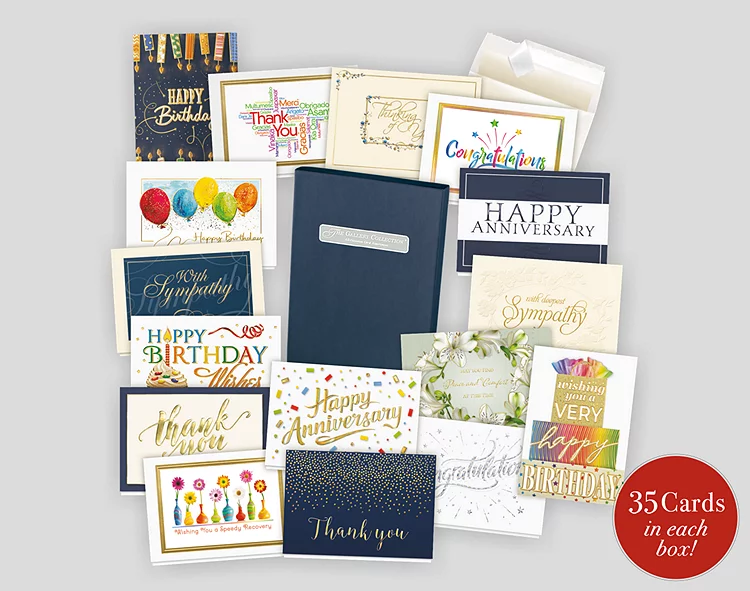
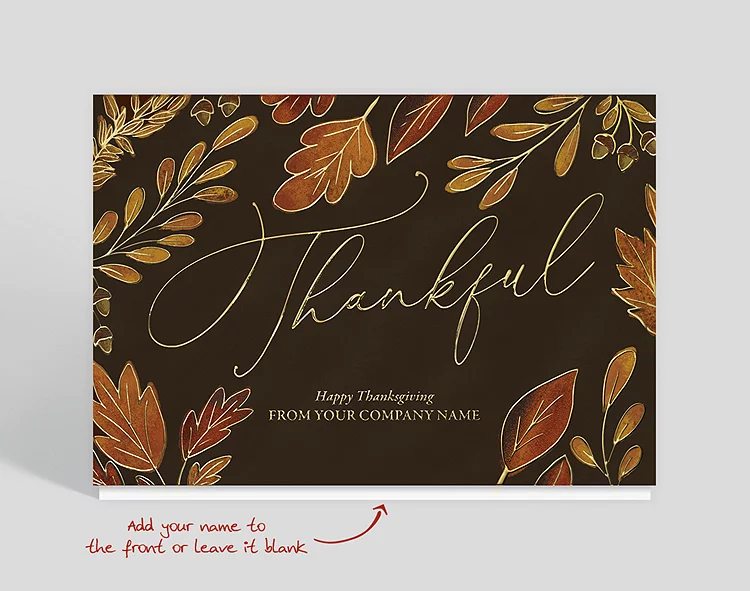
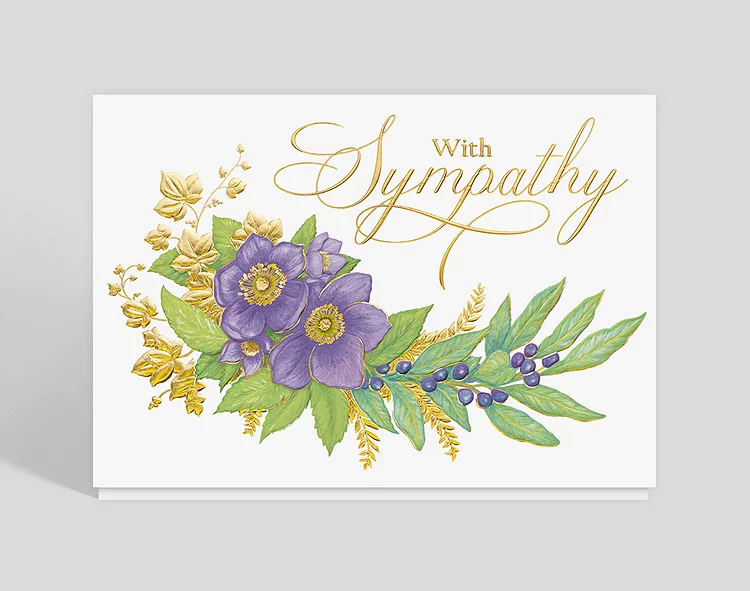
A handwritten note tells the reader that someone took the time to think, choose the words, and put pen to paper. For teachers who pour energy into classrooms every single day, that recognition carries real emotional weight. Printed cards with a personal message inside combine the polish of a quality card with the sincerity of your own words.
What Should You Say in a Teacher Appreciation Message?
Before you start writing, keep three things in mind.
Be specific
A vague “thanks for everything” is kind, but a note that says “thank you for staying after school to help my son with fractions” hits differently. The detail tells the teacher you noticed.
Be sincere
You do not need to write a novel. A few honest sentences are enough. Teachers can tell the difference between a heartfelt note and one that sounds like a template.
Be encouraging
Teaching is demanding. A message that reminds someone their effort makes a real difference goes a long way. You are fueling them for what comes next.
What Are Some Teacher Appreciation Messages from Parents?
Parents often want to acknowledge how a teacher shaped their child’s year. Here are a few messages that feel personal without being over the top.
- “Thank you for believing in [child’s name] even on the tough days. Your patience made all the difference.”
- “We noticed how much [child’s name] grew this year, and we know your guidance played a huge role.”
- “You created a classroom where my child felt safe to ask questions and make mistakes. That is a gift.”
- “Our family appreciates the extra effort you put into making learning fun. [Child’s name] talks about your class at the dinner table.”
- “Thank you for seeing the best in our child and helping them see it too.”
A parent’s note means the most when it connects a specific change in their child to the teacher’s effort.
What Can Students Write in a Teacher Thank-You Note?
Students of any age can write something meaningful. Younger kids might need a little help, and older students can speak from experience.
- “Thank you for making [subject] actually interesting. I used to dread it, and now it is one of my favorites.”
- “You always made time to answer my questions, and I want you to know that I noticed.”
- “I will remember this class because of you. Thank you for caring about all of us.”
- “Your encouragement helped me believe I could do better, and I did.”
- “Thank you for being the kind of teacher who listens.”
The best student messages name one thing the teacher did that stuck with them. A single honest memory says more than a page of general praise.
How Can Schools and Workplaces Recognize Teachers with Cards?
Teacher appreciation goes beyond individual thank-you notes. Schools, districts, and companies that partner with educational programs can use cards as part of a formal recognition effort.
An HR team or school administrator ordering employee appreciation cards in bulk can make sure every teacher on staff feels seen during Teacher Appreciation Week or at year’s end. Group messages signed by a department or parent committee reinforce how valued a teacher’s contribution truly is.
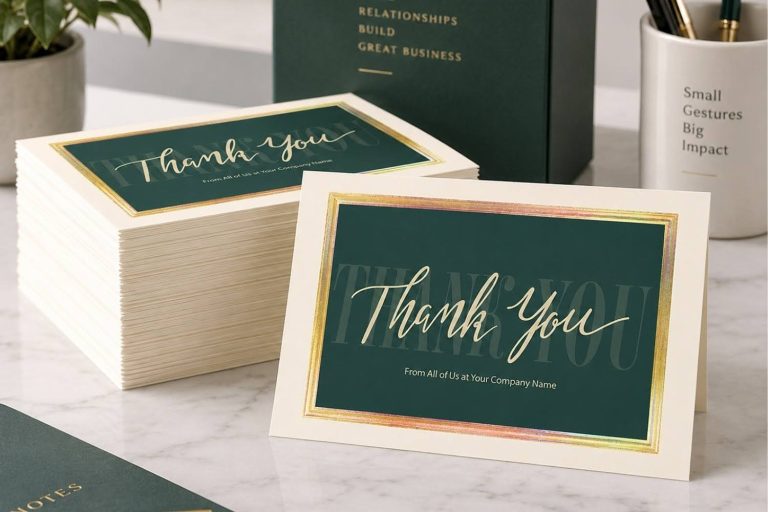
For teams sending appreciation from a group, a card like the Appreciation From All Thank You Card carries a “Thank You From All of Us” message in gold foil on cream card stock. Cards like this work well when a whole grade level or parent association wants to express shared gratitude.
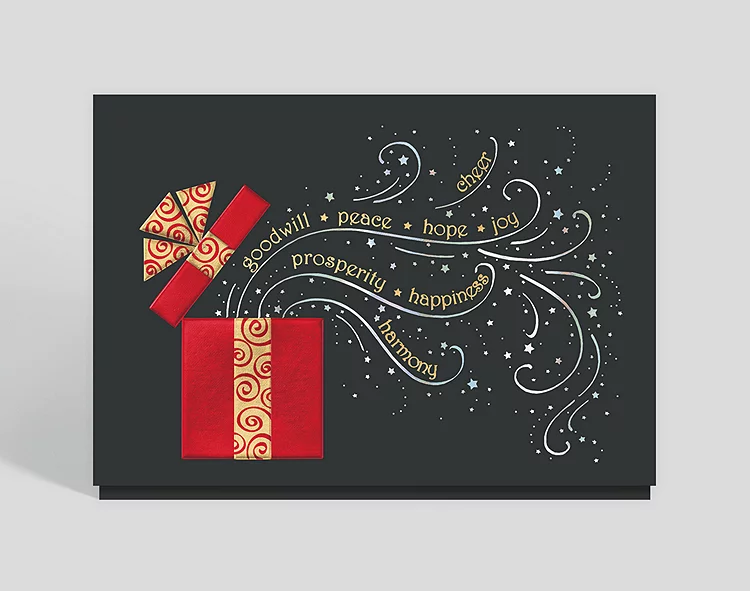
For a more polished, professional thank-you, the Polished Appreciation Thank You Card pairs gold and silver foil with a sleek black background. A card like that signals thoughtful, intentional recognition.
Businesses that work with schools or sponsor events can build goodwill by sending quality cards to educators in their community.
What Are Some Short Teacher Appreciation Messages That Work?
Sometimes a short message is all you need. A few warm lines inside a quality card can be just as impactful as a long letter.
- “Your hard work does not go unnoticed. Thank you.”
- “You make a difference every day. We appreciate you.”
- “Thank you for bringing energy and heart to the classroom.”
- “You help shape futures, and that matters.”
- “Grateful for you and the work you do.”
Short messages work best when paired with a card that already carries an elegant design. The card sets the tone, and your personal note adds the finishing touch.
What Tips Help You Write a Memorable Teacher Appreciation Note?
A few practical tips can help your message feel polished and personal.
Use the teacher’s name
“Dear Ms. Johnson” feels warmer and more intentional than a generic greeting.
Mention a moment
Even a small memory, like a class project or a kind word in the hallway, makes the note feel real.
Avoid clichés when you can
“You are the best teacher ever” is nice, but “you changed how my daughter feels about reading” tells a story.
Keep it warm but not excessively
One or two genuine sentences make a stronger impression than a page of superlatives.
Choose a quality card
A premium, well-designed card from a trusted source like The Gallery Collection tells the recipient you cared enough to pick something special.
Frequently Asked Questions
Teacher Appreciation Week in May is the most popular time, but a card at the end of the school year or during the holidays is always welcome. Teachers appreciate recognition any time of year.
Absolutely. Many teachers say that a brief, specific, handwritten note is one of the most meaningful things they receive. Length matters less than sincerity.
Both can sign it. A parent’s message paired with a child’s drawing or signature creates a note that feels personal from the whole family.
Start with one thing the teacher did that made an impact. Even something simple like “thank you for your patience this year” is a genuine and welcome message.
Both are thoughtful in their own way. A premium printed card with a handwritten note inside offers a polished look that many teachers keep for years.