January rolls around, and inboxes fill with the same flat greeting. “Happy New Year! Wishing you success in the year ahead.” Your clients have seen that message a dozen times before yours even arrives.
A strong corporate New Year message should feel different. Warm, specific, and forward-looking. For sales and account management teams planning outreach for 2027, this guide walks through how to write messages that clients will actually read and appreciate.
Why Does Corporate New Year Messaging Still Matter for Client Relationships
A New Year message is one of the simplest ways to keep a business relationship warm without asking for anything in return. No pitch, no upsell, no agenda. Just a note that says, “We value working with you, and we are looking forward to the year ahead.”
That kind of outreach stands out because so few companies do it well. Most businesses either skip New Year greetings altogether or send something so generic it blends into the noise. A message with even a small personal touch can remind clients that they are more than a line item on your account list.
What Makes a New Year Message for Clients Feel Genuine
The biggest mistake in corporate New Year messaging is making it about you. Clients can spot a message that was written for the company’s benefit rather than theirs.
A genuine message does three things. First, it thanks the client for something specific, whether that is their trust, their collaboration, or the work you completed together. Second, it looks forward. New Year greetings land best when they focus on what is ahead rather than what is behind. Third, it keeps things brief. Two to four sentences is enough when the words are real.
Example messages for established clients
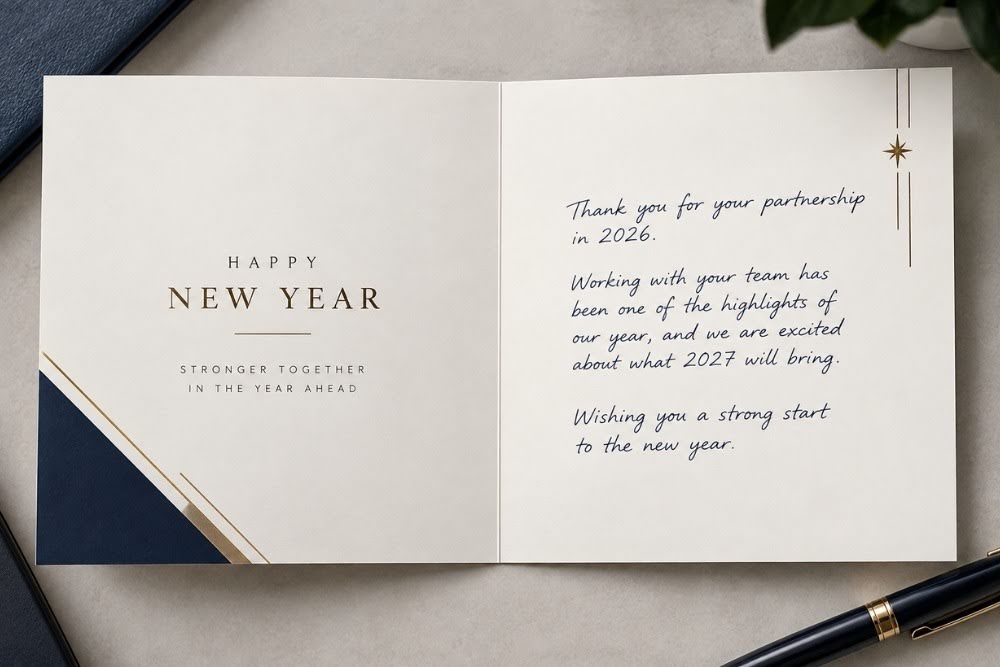
- “Thank you for your partnership in 2026. Working with your team has been one of the highlights of our year, and we are excited about what 2027 will bring. Wishing you a strong start to the new year.”
- “Happy New Year from our team to yours. We are grateful for the trust you have placed in us, and we look forward to continuing the work we have built together.”
- “Wishing you and your team a healthy, prosperous 2027. We appreciate your business more than a short note can say, and we are looking forward to the months ahead.”
How Should You Adjust the Tone for Different Client Relationships
Not all client relationships are the same, and your messaging should reflect that. A long-standing client who has worked with you for years deserves something warmer and more personal than a new account you signed last quarter.
For long-term clients
Lead with gratitude and shared history. Reference how long you have worked together or a milestone you reached. A line like “After another strong year together, we are excited to see what 2027 brings” shows awareness without being over the top.
For newer clients
Keep it welcoming and forward-looking. Something like “We are glad to have started working together in 2026, and we look forward to building on that momentum in the new year” strikes the right balance between professional and warm.
For high-value or executive contacts
Match the formality they expect. Shorter, polished messages with a clear sign-off work best. Avoid exclamation points and overly casual phrasing if the relationship has been conducted formally.
Should Your New Year Message Go in an Email or a Printed Card
Both can work, but they create very different impressions.
An email is fast and easy to scale. For large client lists, a well-written email with a personal subject line can reach hundreds of contacts quickly. The tradeoff is that emails are easy to delete and easy to forget.
A printed card changes the dynamic. A physical New Year card on quality paper stock sits on a desk where it stays visible for weeks. A client who receives a premium card with a company logo and a handwritten note inside will notice the difference.
For sales teams weighing both options, sending emails to your broader contact list while reserving printed business New Year cards for top-tier accounts can be an effective approach.
How Do You Plan Your Corporate New Year Outreach for 2027
Good New Year messaging does not happen on December 31. Planning ahead gives you time to segment your client list, craft messages for different relationship tiers, and order any printed materials before the holiday rush.
A simple planning timeline
- October to November: Decide which clients will receive printed cards versus digital messages. If you plan to send personalized New Year cards with your company logo and a custom sentiment, placing orders early ensures the cards are ready before the end-of-year rush.
- Early December: Draft your messages. Write two or three versions so you can tailor the tone for different relationship levels.
- Late December to early January: Send printed cards before New Year’s Day. Digital messages can go out between December 30 and January 5 to land during the window when people are thinking about fresh starts.
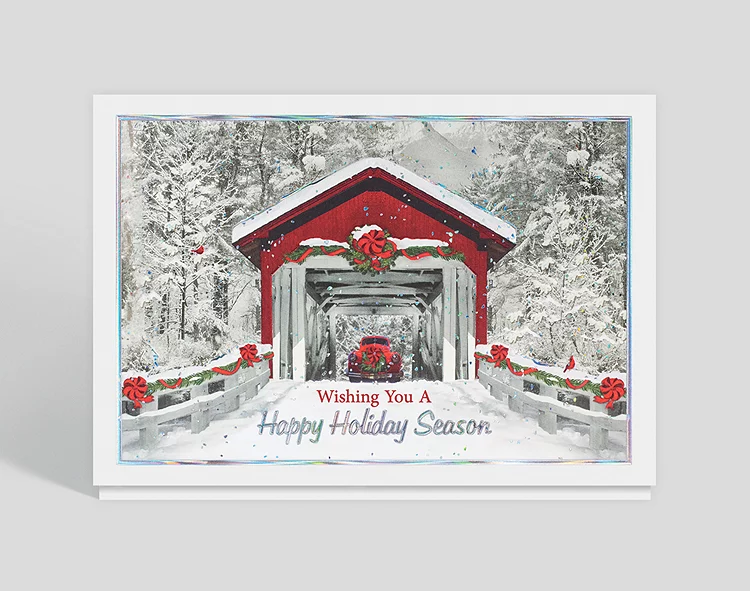
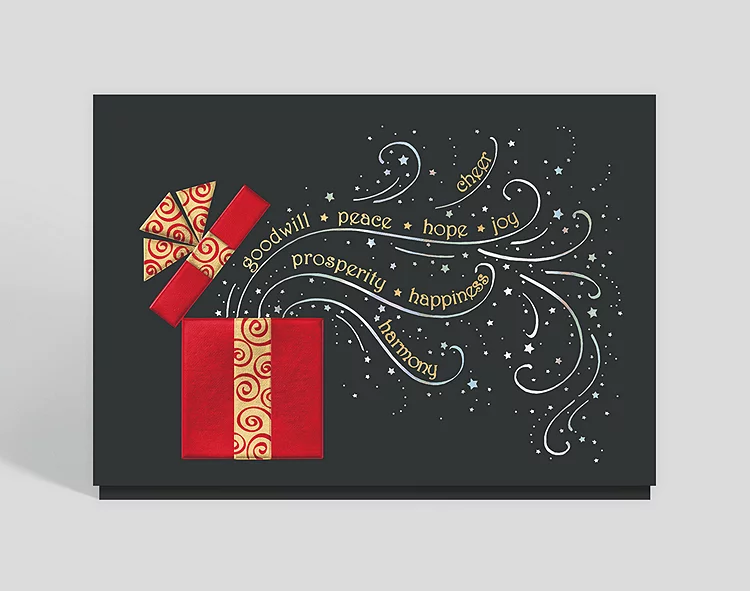
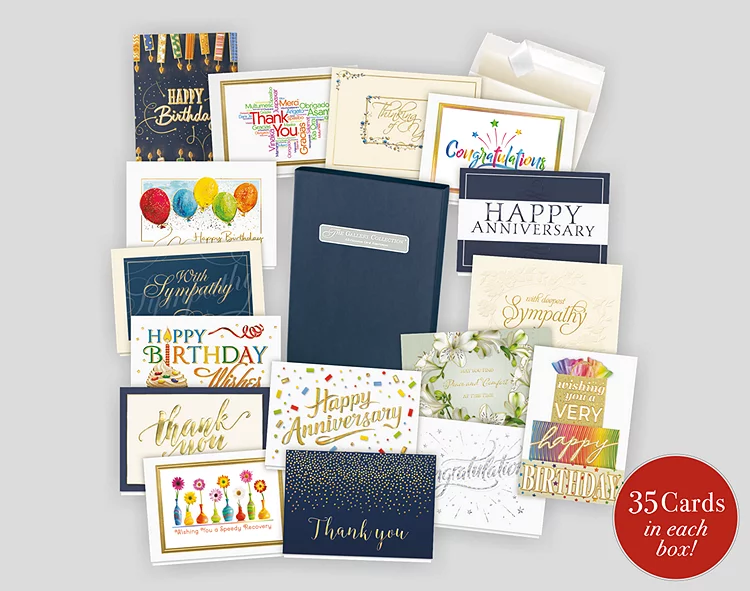
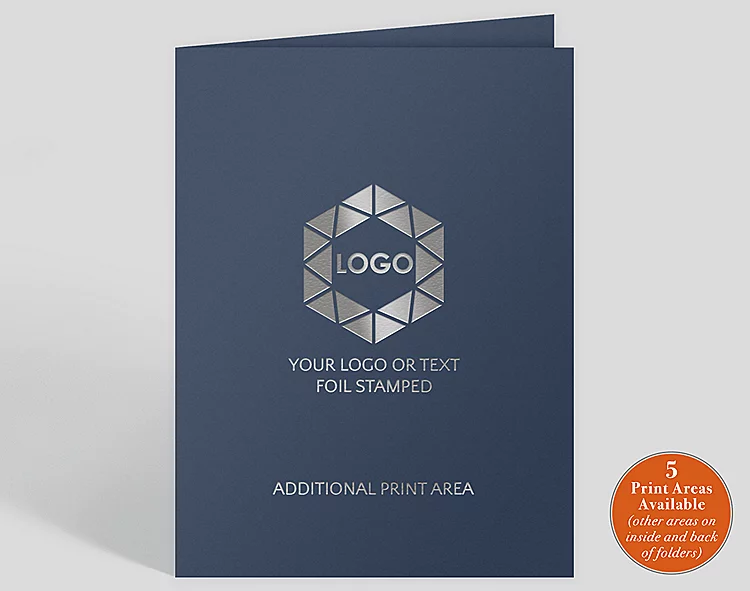
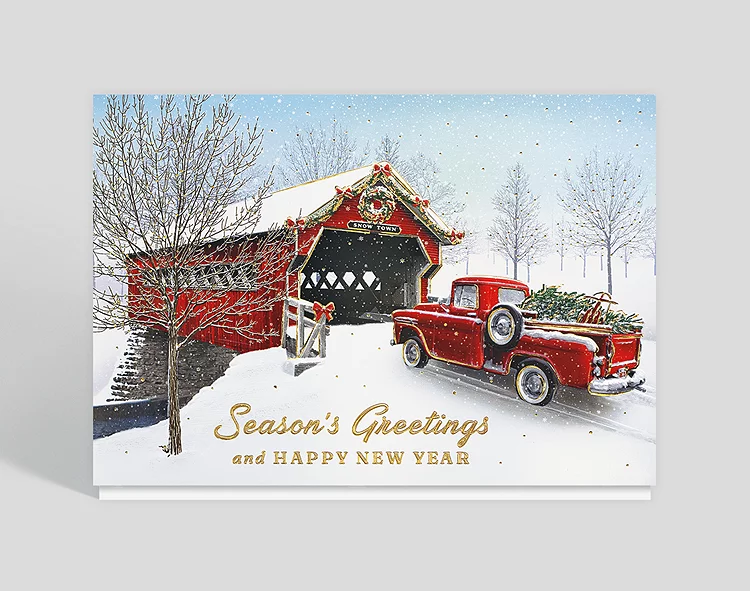
For teams that want a polished, branded card to pair with their outreach, The Gallery Collection offers a full range of New Year cards printed on premium paper stock with foil accents and sculpted embossing. Each card can be customized with your company name, logo, and a personal greeting inside.
What Should You Avoid in Corporate New Year Messages
A few common mistakes can turn a well-intentioned message into something forgettable.
Avoid making it a sales pitch. A New Year greeting that pivots into a product mention loses credibility. Keep the message focused on the relationship.
Avoid vague, generic language. Phrases like “wishing you success and prosperity” are so common that they do not register. A short, specific line about your shared work tends to land better than a broad wish.
Avoid waiting too long. A New Year message sent in the second or third week of January can feel like an afterthought.
Frequently Asked Questions
Between December 30 and January 5 tends to be the most effective window. Printed cards should arrive before New Year’s Day, while digital messages can land in the first few days of January.
Two to four sentences is enough. Focus on gratitude, a forward-looking note about the partnership, and a warm closing. Brevity keeps the message feeling genuine rather than forced.
When possible, yes. Even a small personal touch, like referencing a project you worked on together, can make the message feel much more meaningful than a blanket greeting.
Absolutely. A New Year card is inclusive, avoids the December rush, and gives your message a better chance of standing out since fewer businesses send them compared to holiday cards.
For your most important client relationships, a printed card on premium paper with your logo and a personal note inside creates an impression that an email simply cannot match.