A sympathy card is sitting on your desk at work. A few people have already signed, and now you are staring at the blank space, wondering what to write. You want your message to feel genuine without overstepping, and you do not want to write something awkward that your grieving coworker reads during one of the hardest weeks of their life.
Knowing how to sign a sympathy card at work comes down to a few basics: keep it short, keep it sincere, and let the relationship guide the tone.
How Do You Sign a Sympathy Card From a Coworker
If you are wondering how to sign a sympathy card from a coworker, the simplest answer is to write one or two honest sentences and sign your full name.
A sympathy card closing does not need to be elaborate. A short note that acknowledges the loss and offers a kind thought is enough. Here are a few lines that work well in most workplace situations:
- “I am so sorry for your loss. Thinking of you and your family.”
- “Sending you my sincere condolences during this difficult time.”
- “My heart goes out to you. Wishing you comfort in the days ahead.”
- “I am sorry for what you are going through. Please know I am here if you need anything.”
After your message, close with a phrase like “With sympathy,” “With warm thoughts,” or “Thinking of you,” followed by your first and last name. Using your full name matters more than you might think. Your coworker may receive many cards, and a signed card with your last name helps them know exactly who reached out.
What Do You Write When Signing a Group Sympathy Card at Work
Group sympathy cards are common in offices. HR or a team lead buys one card, routes it around the department, and everyone adds a message. But what do you write when signing a group sympathy card at work when ten other people are writing in the same card?
Keep your note brief and personal. One or two sentences is the right length. Strong group card messages sound like this:
- “You and your family are in my thoughts. Wishing you peace.”
- “So sorry for your loss. We are all here for you.”
- “Holding you in my thoughts during this hard time.”
If you managed or worked closely with the person, a slightly longer note is appropriate. Something like, “Working with you has shown me what a caring person you are, and I know that quality comes from your family. I am truly sorry for your loss.”
Sign early if you can. Waiting until the last minute often means you are squeezed into a corner with a rushed message. Signing early gives you space to write something considered.
What Sympathy Card Closings Work Best in a Professional Setting
The closing you choose sets the final tone of your message. In a workplace setting, you want something warm but not overly intimate. Closings that work well at the office include:
- “With sympathy”
- “With warm thoughts”
- “With deepest sympathy”
- “Thinking of you”
- “With care”
Skip closings like “Love,” “XOXO,” or anything that reads as too personal for a professional relationship. When in doubt, lean toward a respectful sympathy card closing rather than a casual one. And sign your first and last name so the recipient can connect each message to the right person.
Should You Handwrite or Use the Printed Message Inside the Card
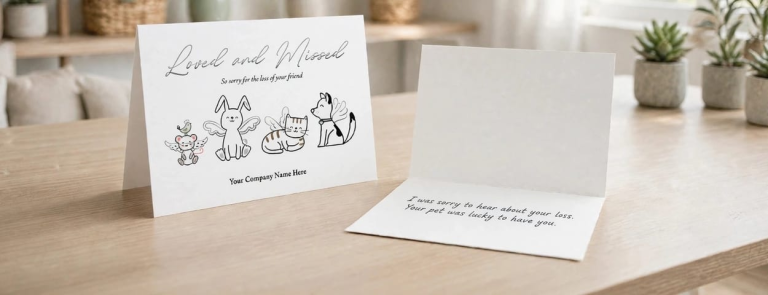
A quality sympathy card will come with a printed sentiment inside. That pre-printed message is often enough on its own. But adding a handwritten line beneath it makes the card more meaningful.
Even a single sentence in your own handwriting adds a personal layer that a printed message alone cannot match. Use a black or blue pen for a clean, respectful look. And keep your message simple if you are not sure what to say. A short, honest note lands better than a long paragraph that tries too hard.
For companies that send sympathy cards to clients and employees regularly, having cards on hand means the office can respond quickly. HR teams and office managers who keep a supply of premium cards ready can focus on the message rather than scrambling to find a card at the last minute.

With Deepest Sympathy Elegance Card
View Card
Brushstroke Sympathy Greeting Card
View Card
Classically Elegant Sympathy Card
View Card
Sympathy Garden Card
View CardWhat Should You Avoid When Signing a Condolence Card at Work
Signing a condolence card at work means being thoughtful about what not to say just as much as what to say.
- Skip clichés that minimize grief. Phrases like “everything happens for a reason” or “they are in a better place” can feel dismissive to someone in pain. Stick to acknowledgment and empathy rather than trying to explain the loss.
- Avoid making the message about you. A sympathy card is about the recipient. Sharing a long story about your own experience with loss shifts the focus away from the person who needs support.
- Leave out religious language unless you are sure. Non-denominational wording works best in a mixed workplace. “Thinking of you” and “With sympathy” are safe choices for any recipient. The dos and don’ts for sympathy cards from The Gallery Collection offer helpful guidance on keeping the tone respectful.
- Do not skip the card altogether. Some people worry so much about saying the wrong thing that they say nothing. Helping coworkers cope during a loss starts with showing up, and a signed card is one of the simplest ways to do that.
When Should You Send a Sympathy Card to a Coworker
Timing matters. Send your card, or sign the group card, as soon as you hear about the loss. A card that arrives in the first week or two carries the most comfort. But even a late card is better than no card at all. For helpful tips on sending sympathy cards on time, the general rule is simple: do not wait. Sign the group card the same day it reaches your desk.
For company condolence cards sent on behalf of the business to clients or associates, a prompt card signals that the relationship matters to your organization.
Frequently Asked Questions
Keep the focus on your coworker. A message like “I am sorry for your loss. Thinking of you and your family” works well even when you did not know the person who passed away.
Either approach works. A group card shows collective support. An individual card lets you write a more personal message. In many offices, a group card goes around the department while closer friends send their own cards separately.
You can simply sign the card beneath the printed sentiment. Writing “With sympathy” and your name is enough. The act of signing shows you care, even without a personal note.
One to three sentences is the right range. Anything longer may feel overwhelming in a professional context. Short and sincere is the goal.