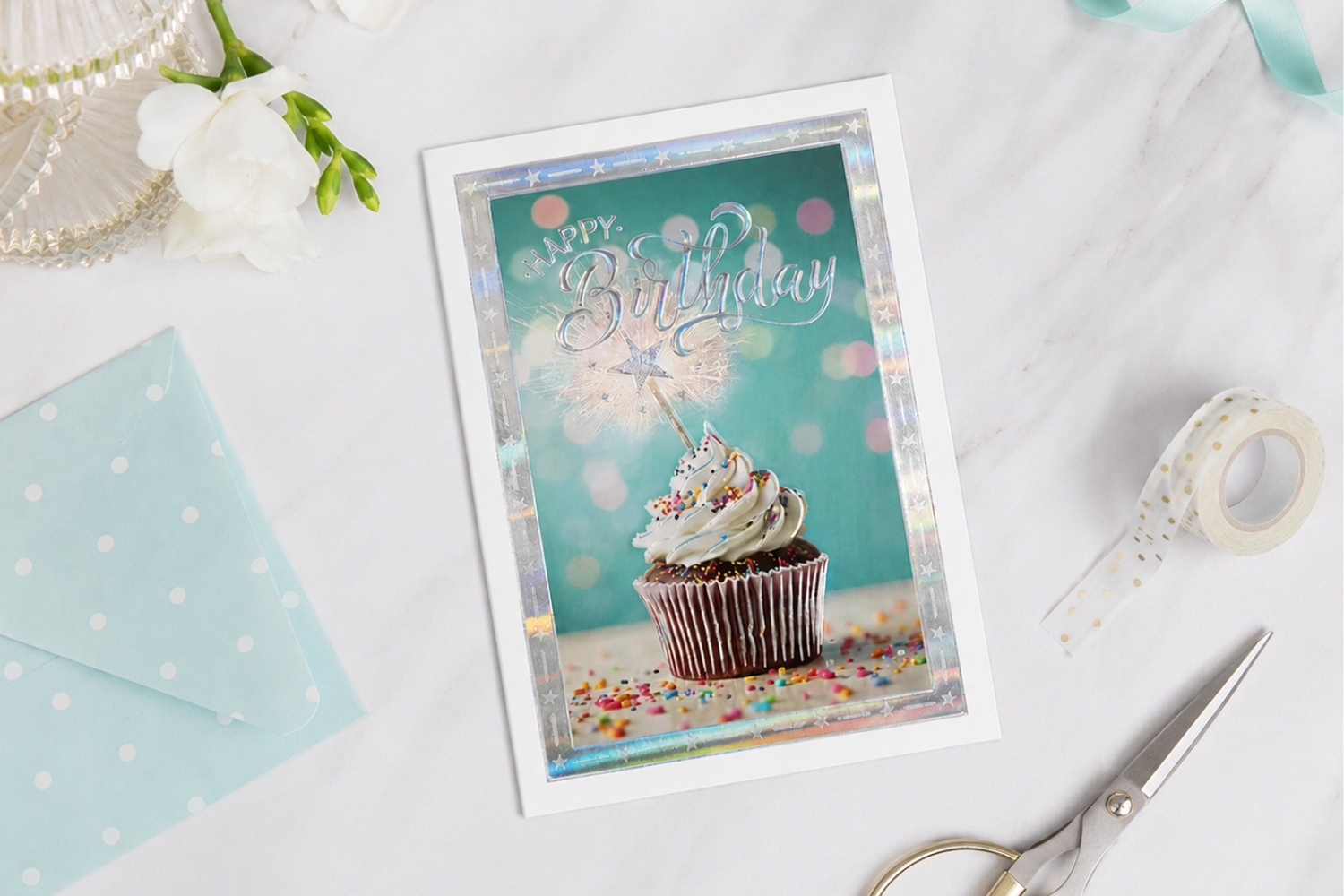
When a client picks up your company’s holiday card and runs a finger across the embossed lettering, something happens. The card stops being just a piece of paper. Suddenly, the weight of the stock, the shimmer of the foil, and the crispness of the print all communicate something words alone cannot: that your business cares about the details.
But most people never think about what goes into creating that moment. Understanding how greeting cards are made can change the way you select cards for your company, because once you see what separates a premium card from a forgettable one, the choice becomes easy.
Here is a behind-the-scenes look at the greeting card printing process and why every stage matters for businesses that want to make a lasting impression.
Where Does the Greeting Card Printing Process Actually Begin?
Every quality greeting card starts long before ink touches paper. Designers develop original artwork, carefully choosing color palettes, compositions, and visual themes that match the occasion and audience. For business cards intended for clients and employees, the design stage is especially important because the card needs to feel professional, warm, and aligned with a company’s brand identity.
After the artwork is finalized, pre-press technicians prepare the files for production. Color is separated into print-ready formats. The lines for cutting and folding are mapped out. Plates or cylinders are created for the press. Each of those steps requires precision, because even small misalignments at the pre-press stage can affect how the finished card looks and feels.
At Gallery Collection, original card designs are developed in-house, which gives the brand full creative control from concept through final production. That kind of end-to-end oversight is a hallmark of publishers who prioritize quality over volume.
How Does Paper Selection Shape the Final Product?
Paper is the foundation of any greeting card, and the stock you choose determines how the card feels in someone’s hands. Premium greeting cards use heavyweight paper with a smooth or lightly textured finish that communicates quality the moment the envelope is opened.
Professional card publishers select paper based on weight, brightness, texture, and how well the surface accepts ink, foil, and embossing. A heavier stock holds its shape when standing on a desk or mantle, which matters for business cards that might stay visible in a recipient’s office for weeks.
The paper also needs to fold cleanly without cracking at the spine, accept multiple layers of finishing, and pair well with coordinating envelopes. Getting all of that right requires expertise and testing, not just a trip to the paper aisle.
What Role Does Embossing Play in How Greeting Cards Are Made?
Embossing is one of the most distinctive finishing techniques in the greeting card printing process. A custom metal die is pressed into the paper from behind, pushing specific design elements above the surface. The result is a raised, sculptural effect that adds dimension and texture without relying on ink.
When recipients hold an embossed card, the design feels alive under the fingertips. Snowflakes, borders, lettering, and decorative patterns all gain depth and presence. Sculpted embossing, which Gallery Collection uses across many of its card designs, takes the technique further by creating intricate multi-level relief patterns that look and feel hand-carved.
For businesses, embossing signals craftsmanship and attention to detail. A flat, printed card communicates a message. An embossed card communicates a standard. And in professional settings where brand perception matters, that difference is significant. For more on why that kind of quality matters in a business context, read about greeting cards as a powerful marketing tool.
How Does Foil Stamping Add a Premium Touch?
Foil stamping uses heat and pressure to transfer a thin layer of metallic or pigmented foil onto the card surface. Gold, silver, copper, and colored foils are the most common options, and each creates a reflective, luminous accent that catches the eye immediately.
The process requires a custom die for each design element being foiled. A heated die presses the foil onto the paper at a precise temperature and pressure, bonding the foil to the surface. The result is a sharp, brilliant finish that standard ink simply cannot replicate.
For business greeting cards, foil stamping turns a seasonal message into something recipients want to display. A foil-accented company name on the front of a holiday card, for example, reinforces brand recognition while adding a premium visual element. Combined with embossing, foil stamping creates a layered, tactile experience that makes a card feel like a genuine gift rather than a routine mailing.
Why Does Personalization Matter in the Greeting Card Printing Process?
A beautifully printed card becomes even more powerful when personalized. Businesses that add company logos, custom messages, staff signatures, or recipient names to the card are turning a general greeting into a branded touchpoint.
Personalization happens at a separate stage of production. After the base card is printed, embossed, and foil-stamped, the personalization elements are imprinted. Company names, logos, and custom sentiments are printed inside or on the front of the card using carefully matched ink colors and typography.
Gallery Collection supports a wide range of custom greeting card options, including logo placement on the card front, editable inside sentiments, signature lines, and imprint color selection. For holiday cards specifically, making business Christmas cards personal with custom touches can strengthen client relationships and reinforce employee appreciation during the most important card-sending season of the year.
What Makes a Quality Greeting Card Worth Sending for Your Business?
Understanding how greeting cards are made puts every ordering decision into sharper focus. A card printed on thin stock with flat ink and no finishing will arrive, get read, and likely get recycled the same day. A card printed on heavyweight paper with sculpted embossing, brilliant foils, and a personalized company message has a very different trajectory. Cards like that get propped up on desks, admired, and remembered.
For office managers, HR teams, marketing departments, and procurement buyers, the quality of a greeting card reflects directly on the company sending the card. Every element, from the paper weight to the foil accents to the crispness of the printed sentiment, contributes to how the recipient perceives your brand.
Gallery Collection has been producing premium printed greeting cards since 1929, with a commitment to craftsmanship backed by a 100% satisfaction guarantee. When a business invests in a card that looks and feels exceptional, the return comes in the form of stronger relationships, better brand perception, and a reputation for doing things well.
Frequently Asked Questions
Professional greeting card publishers typically use offset printing, which produces rich, consistent color on high-quality paper stock. Offset printing is ideal for large runs and allows for precise color matching across every card in an order.
Production timelines vary based on order size, finishing techniques, and personalization. Most premium card orders, including embossing, foil stamping, and custom imprinting, take one to two weeks from order confirmation to shipment.
Yes. Gallery Collection offers front-of-card logo imprinting on digitally printed designs. Businesses can also add custom inside sentiments, signatures, and imprint colors to match brand guidelines.
Embossing raises portions of the paper to create a textured, dimensional effect. Foil stamping applies a metallic or pigmented foil to the surface for a reflective, luminous finish. Many premium cards combine both techniques for maximum visual and tactile impact.
Heavier paper stock feels more substantial in the hand, holds its shape when displayed, and accepts finishing techniques like embossing and foil stamping with cleaner results. Premium paper signals quality and professionalism to recipients.