Most people have written “Season’s Greetings” on a card without thinking twice about where the phrase came from. But behind those two familiar words is a story that stretches back over a century, rooted in Victorian-era tradition, postal innovation, and a growing need for inclusive holiday communication.
For businesses, the seasonal greetings history and meaning carry real practical value. Choosing the right holiday greeting can strengthen client relationships, respect a diverse audience, and position your company as thoughtful and professional.
Here is a closer look at the season’s greetings origin, how the phrase evolved, and why modern businesses continue to print the words on premium cards every holiday season.
Where Does the Season’s Greetings Origin Begin?
The tradition of sending holiday cards took root in 1843, when Henry Cole, a prominent figure in Victorian England, commissioned the first commercial Christmas card. Cole was overwhelmed by holiday correspondence and needed a faster way to send well-wishes to friends, colleagues, and associates. The card he produced featured a festive family scene alongside depictions of charitable acts, with the greeting “A Merry Christmas and a Happy New Year to You.”
The idea caught on quickly. Affordable postal rates and advances in printing technology made greeting cards accessible to the growing middle class across England. Within a few decades, sending holiday cards had become a widespread social custom. Louis Prang, a Prussian immigrant working in America, began producing Christmas cards in 1875 and helped bring the tradition to the United States.
As card-sending grew, so did the need for greetings that could speak to a wider audience. Not every recipient celebrated Christmas in the same way, and business senders in particular needed language that would feel warm without making assumptions. The phrase “Season’s Greetings” began appearing on cards in the mid-to-late 1800s, offering goodwill during the winter holiday period without singling out one specific celebration.
What Do the Season’s Greetings’ History and Meaning Really Tell Us?
At face value, “Season’s Greetings” is straightforward. The apostrophe shows possession: the greetings belong to the season. The phrase covers the entire stretch of winter holidays, from Thanksgiving through New Year’s Day, and conveys friendly wishes without tying the message to a specific religious or cultural event.
But the deeper meaning goes beyond grammar. The rise of “Season’s Greetings” reflected a cultural shift toward inclusivity in holiday communication. As communities across the United States grew more diverse, businesses, government offices, and organizations started looking for language that could acknowledge the festive period while respecting different traditions. The phrase became especially popular in the early-to-mid 20th century, appearing on everything from corporate cards to official holiday mailings.
For business professionals, the meaning is practical. A season’s greetings card says, “We value you, we respect your traditions, and we are thinking of you during the holidays.” That kind of message builds trust, and trust strengthens business relationships.
How Did Season’s Greetings Cards Become a Business Standard?
Holiday card-sending moved from personal custom to business practice as companies recognized the value of staying visible with clients and partners during the end-of-year season. A well-chosen holiday card, sent at the right time, could reinforce loyalty and keep a company top-of-mind heading into the new year.
Season’s Greetings cards became especially useful for businesses with diverse client bases. A law firm serving clients across multiple backgrounds, a healthcare practice with a varied patient community, or a finance company working with partners around the country could all benefit from a greeting that welcomed everyone equally.
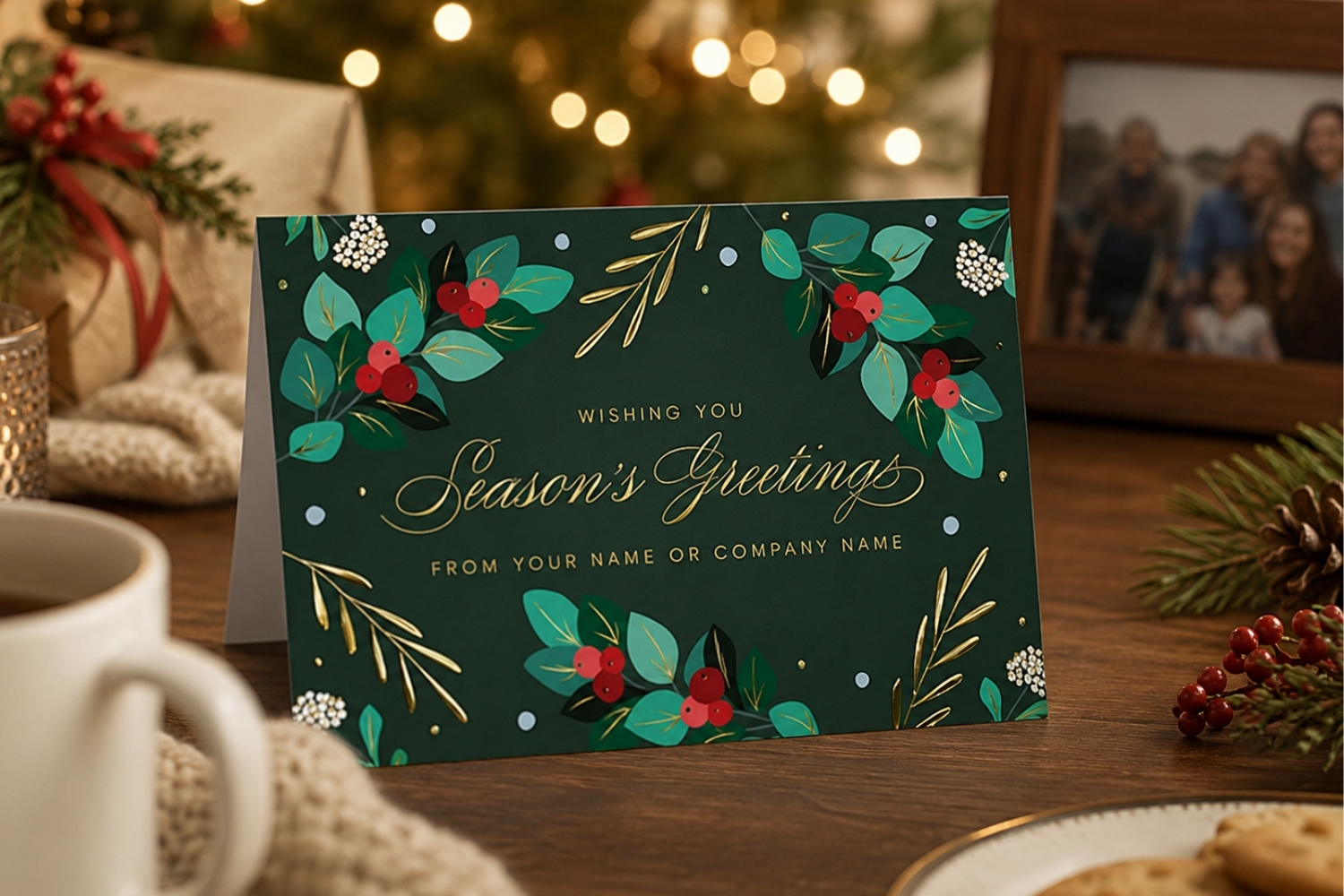
The phrase also worked well for companies that wanted warmth without informality. “Season’s Greetings” strikes a polished, professional tone that fits naturally into premium card designs, particularly when paired with sculpted embossing, foil accents, and a company logo. Gallery Collection has offered Season’s Greetings cards designed specifically for business use since 1929, with options to customize sentiments, add company branding, and include team signatures.
Why Do Modern Businesses Still Choose Season’s Greetings Cards?
In a time when most communication happens through screens, a printed card with a genuine message stands apart. Recipients may scroll past hundreds of digital messages in a week, but a premium, textured card with a name and logo printed on high-quality paper stock tends to stay on a desk or mantle for weeks.
Season’s Greetings cards remain a smart choice for several practical reasons.
A Season’s Greetings card respects the diversity of your audience. Whether your recipients celebrate Christmas, Hanukkah, Kwanzaa, or simply enjoy the winter holidays, the greeting fits without friction. Companies with national or industry-wide client lists benefit from that universal appeal.
The phrase signals professionalism. Where casual holiday slang might feel too relaxed and overtly religious language might feel presumptuous, “Season’s Greetings” hits a polished middle ground that suits corporate communication.
Printed Season’s Greetings cards also double as brand touchpoints. When the card features your company name, logo, and a premium finish, the greeting reinforces brand perception every time the recipient looks up from a desk.
If you are weighing options between “Season’s Greetings” and other holiday phrases, the Gallery Collection blog covers the topic in a helpful post on choosing between Season’s Greetings and Happy Holidays.
How Should You Use Season’s Greetings Cards in Your Business?
Getting the most from Season’s Greetings cards requires a few practical steps.
Order early. The best time to plan your holiday card outreach is mid-summer through early fall, well before the November ordering rush. Gallery Collection offers a wide range of customizable designs that allow you to match card style to your brand identity.
Personalize the message. A printed “Season’s Greetings” is a solid starting point, but adding a short handwritten note or your team’s signatures makes the card feel personal rather than mass-produced.
Match the card to the audience. For clients, a formal design with your company logo conveys professionalism. For employees, a warmer, more casual design with an appreciative message can boost morale and show that leadership values the team.
Time for the mailing. Aim for early December delivery, so your card arrives before the holiday rush and earns prominent display time on a desk or windowsill.
Frequently Asked Questions
The correct form uses an apostrophe: Season’s Greetings. The apostrophe shows that the greetings belong to the season, referring specifically to the winter holiday period. Without the apostrophe, the phrase would awkwardly refer to greetings for all four seasons.
Businesses began adopting holiday card-sending as a client outreach practice in the early 20th century. The phrase “Season’s Greetings” gained popularity as companies looked for inclusive language that would resonate with diverse audiences across the United States.
Yes. The phrase is non-denominational and universally welcoming, making Season’s Greetings cards a safe and professional choice for clients, vendors, employees, and partners regardless of religious or cultural background.
Absolutely. Adding your company logo to the front of a card reinforces brand recognition and turns a holiday greeting into a polished brand touchpoint. Gallery Collection offers logo imprinting on most card designs.
Ordering between mid-summer and early fall gives you the widest selection of designs and enough time to customize, personalize, and schedule mailing before the holiday rush begins.