A postcard might seem like a small thing. And honestly, that simplicity is exactly what makes postcards so effective for business outreach.
When inboxes overflow with promotional emails and digital ads blur together, a physical postcard lands in someone’s hands and gets noticed right away. For companies looking to stay visible with clients or thank loyal customers, knowing how to send a postcard the right way matters more than most people realize.
Here is everything your company needs to know about choosing, writing, addressing, and mailing postcards that leave a lasting impression.
Why Do Postcards Still Work for Business Communication?
Postcards offer something digital channels simply cannot: a physical presence in someone’s space. When a client receives a well-crafted postcard featuring your company name, logo, and a thoughtful message, that card becomes a tangible reminder of your brand.
Unlike emails that vanish in crowded inboxes, a postcard sits out in the open. On a desk. Pinned to a bulletin board. And because postcards do not require an envelope, recipients see your message and branding the moment the mail arrives.
For businesses, postcards serve a wide range of purposes. Office managers use them for company announcements. Marketing teams send them as client appreciation touchpoints. HR departments mail them to celebrate employee milestones.
Gallery Collection has offered premium printed business communication products since 1929, and personalized postcards remain one of the most accessible ways for companies to connect with clients through physical mail.
What Do You Need Before Mailing a Postcard?
Before you send a single postcard, gather a few essentials.
Start with the postcard itself. For business use, choose a design and paper quality that reflects your brand. Flimsy, generic postcards can undermine the professional image you want to project. Premium cardstock with a clean layout signals that your company values quality in every detail.
Next, confirm you have the correct mailing address for each recipient. Returned mail wastes time and money, and outdated addresses are one of the most common reasons business mail goes undelivered.
Finally, purchase the right stamps. Standard domestic postcards in the United States require a postcard stamp, which costs less than a first-class letter stamp. You can buy stamps at any post office, online through the USPS mailing portal, or at most grocery stores.
How Do You Send a Postcard Step by Step?
Sending a postcard is a quick process once your materials are ready. Follow the steps below to make sure every card reaches its destination.
Step 1: Choose or Design Your Postcard
Pick a postcard that matches the purpose of your message. A thank-you note to a long-term client calls for something polished and professional. A seasonal greeting works well with warm imagery and festive colors.
For businesses that want postcards with company branding, customizable options let you add your logo, choose imprint colors, and select a design that aligns with your identity. Gallery Collection offers a curated range of business postcards with customization options designed for professional outreach.
Step 2: Write Your Message
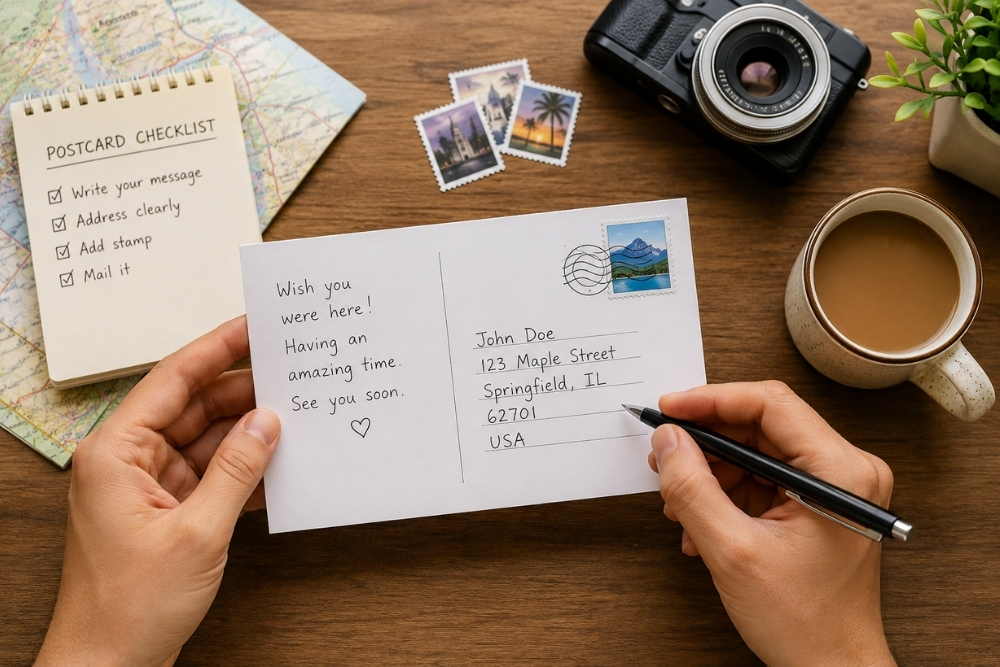
Use the left side of the postcard for your message. Keep the tone warm but professional. A few genuine sentences go further than a full paragraph of filler.
Good business postcard messages are specific. Rather than a generic “thinking of you,” try something like: “We appreciate your partnership over the past year. Looking forward to another great one together.”
Sign off with your name or your team’s name. A personal signature adds warmth and authenticity that printed text alone cannot match.
Step 3: Address the Postcard Correctly
Write the recipient’s full name and mailing address on the right side of the postcard. Include the street address, city, state, and ZIP code on separate lines. Keep your handwriting legible, because postal workers process high volumes of mail and unclear addresses can cause delays.
Your return address goes in the upper-left corner. While a return address is not always required on postcards, including one is a smart habit for business mailings so undeliverable cards come back to you.
Step 4: Add the Right Postage
Place the stamp in the upper-right corner of the postcard. Make sure you are using the correct postage for the size and destination. Standard-sized postcards qualify for the lower postcard stamp rate, but oversized cards or international mailings require additional postage.
Step 5: Drop Off or Mail Your Postcard
Once your postcard is written, addressed, and stamped, you are ready to send. Drop the card into any USPS blue collection box, hand your outgoing mail to your carrier, or take the batch directly to your local post office.
For large business mailings, some print providers handle addressing and mailing on your behalf. Gallery Collection, for example, offers recipient addressing and mailing services that reduce administrative friction for companies placing large orders.
What Makes a Business Postcard Stand Out?
The difference between a postcard that gets a glance and one that gets remembered comes down to three things: quality, personalization, and timing.
Quality starts with the paper. A thick, well-finished postcard feels different in someone’s hands than a thin, mass-produced one. Foil accents, embossing, or a matte coating can raise perceived value without adding much to the overall cost.
Personalization means more than printing the recipient’s name. Tailor the message to the occasion. A holiday postcard should feel festive. A thank-you postcard should feel genuine. A promotional postcard should feel direct and helpful, not pushy.
Timing ties the whole piece together. Sending a postcard right after a completed project, just before a holiday, or at the start of a new business quarter makes your outreach feel intentional rather than random.
When Should Your Company Send Postcards?
Postcards work year-round, and the best moment to send one depends on what you want to accomplish.
Seasonal greetings and holiday postcards are a natural fit for the fourth quarter, when clients and partners expect warm messages from the businesses they work with. But postcards are just as effective during quieter months, when a note from your company can stand out even more.
Consider sending postcards after closing a deal, at the anniversary of a client relationship, after a company milestone, or when launching a new service. HR teams can use postcards to recognize work anniversaries, welcome new hires, or acknowledge birthdays and retirements.
Companies that get the most value from postcard outreach are the ones that build postcards into an ongoing communication plan rather than treating each mailing as a one-off effort.
Frequently Asked Questions
Yes, USPS does not require a return address on postcards. However, adding one is recommended for business mailings so that undeliverable cards are returned to you instead of being lost in the system.
A standard USPS postcard must measure between 3.5 x 5 inches and 4.25 x 6 inches, according to USPS postcard size and mailing requirements. Anything larger qualifies as an oversized postcard and may require higher postage.
Domestic postcards sent through USPS First-Class Mail typically arrive within two to five business days, depending on the distance between the sender and recipient.
Absolutely. Many companies order postcards in bulk for client outreach, holiday greetings, and seasonal campaigns. Working with a premium print provider like Gallery Collection gives you access to bulk postcard ordering with volume pricing all in one place.
No. Postcards are designed to be mailed without an envelope. The message, address, and postage all go directly on the card, which keeps costs lower and ensures the recipient sees your branding the moment the mail arrives.