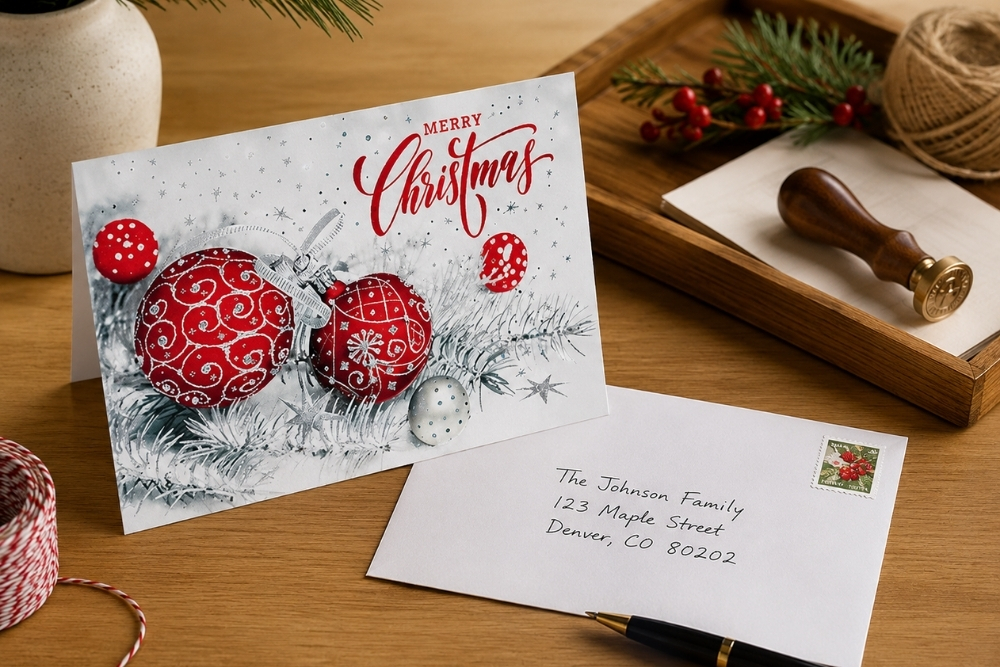
A well-timed Christmas card does more than pass along holiday cheer. For businesses, sending a physical card to clients, employees, and partners is one of the simplest ways to stand out during a season when inboxes overflow with automated messages. A beautifully designed, personalized card sits on a desk for weeks, keeping your company top of mind long after a digital greeting gets deleted.
Knowing how to send Christmas cards the right way can turn a routine task into a genuine relationship-building moment. Whether you are an office manager coordinating a company-wide mailing or a small business owner reaching out to top clients, here is everything you need to plan a holiday card program that feels polished and personal.
Why Do Business Christmas Cards Still Make an Impact?
In a world saturated with emails, texts, and social notifications, physical mail carries a different weight. A printed Christmas card with premium paper, sculpted embossing, and your company name on the front signals something a quick e-card never will: you cared enough to put real thought behind the gesture.
Sending holiday cards reinforces client loyalty, strengthens employee morale, and keeps professional relationships warm heading into the new year. A card is not a sales pitch. A card is a handshake, a thank you, and a promise of continued partnership wrapped into one meaningful package. Meeting that expectation with a high-quality, branded card positions your company as thoughtful and reliable.
How To Send Christmas Cards in Five Clear Steps
Breaking the process into manageable steps keeps the entire holiday mailing organized and stress-free.
Step 1: Build Your Recipient List Early
Start compiling your mailing list well before the holiday season heats up. Pull contacts from your CRM, check for updated addresses, and confirm correct spellings for every name. Segment the list into clients, vendors, employees, and key partners so you can tailor messaging later. A clean, accurate list prevents awkward misspellings or returned mail in December.
Step 2: Choose a Card That Reflects Your Brand
Your Christmas card is a direct reflection of your company. Pick a design that aligns with your brand identity and the tone you want to set. Premium finishes like foil stamping, embossing, and quality paper stock communicate professionalism without saying a word.
Consider whether your audience would appreciate a traditional holiday scene, a modern design, or a photo Christmas card that puts your team front and center. Including a company photo humanizes your brand and reminds recipients of the real people behind the business. Gallery Collection offers a wide selection of business Christmas cards designed specifically for corporate use, with options to customize artwork, colors, and logos.
Step 3: Personalize the Message Inside
A generic printed greeting is fine, but a personalized touch makes the card memorable. Add your company name, a custom sentiment, and individual signatures when possible. Even a short handwritten note beneath the printed message goes a long way toward showing genuine appreciation.
Focus on gratitude rather than promotion. Thank the recipient for the relationship, acknowledge a shared milestone, or simply wish them a joyful season. For more ideas on making business Christmas cards personal, Gallery Collection has helpful guidance on crafting messages that feel warm and authentic.
Step 4: Address Envelopes With Care
How you address the envelope matters more than most people realize. Use the recipient’s full name and proper title. For business contacts, include the company name and a “c/o” line if sending to a specific person at an office. Hand-addressed envelopes make the strongest impression. If volume makes that impractical, consider addressing services that keep the presentation clean and professional.
Step 5: Mail Early Enough To Arrive on Time
Timing is everything. Cards should arrive between late November and the second week of December, well before the holiday rush overwhelms postal services. Mailing too late risks the card landing in a pile of post-holiday junk mail, and that defeats the purpose entirely.
Work backward from your target delivery date. Factor in production time for personalization and printing, plus shipping to your office, plus outbound mailing. Starting the process in early fall gives you a comfortable cushion to handle everything without scrambling.
What Turns a Generic Christmas Card Into Something Memorable?
The difference between a forgettable card and one that earns a place on someone’s desk comes down to three things: quality, personalization, and relevance.
Quality speaks first. A card printed on thick, premium stock with crisp foil accents feels different in the hand than a flimsy, mass-produced option. Personalization speaks next. Adding the recipient’s name, a genuine sentiment, and an individual signature all signal effort and care. Relevance ties everything together. Match the design to your industry and audience. A law firm might lean toward a classic winter scene, while a construction company might prefer something bold and distinctive. Gallery Collection offers industry-specific designs across categories like finance, healthcare, and real estate, making pairing the right card with the right audience easy.
When Is the Best Time To Send Christmas Cards?
For business holiday cards, the sweet spot is the first two weeks of December. Cards that arrive too early feel premature. Cards that arrive after Christmas feel like an afterthought.
Planning should start much earlier, though. Smart businesses begin selecting designs and building recipient lists by late summer or early fall. A good rule of practice: place your card order by October, finalize your list and messages by early November, and have everything addressed and ready to mail by Thanksgiving.
Who Should Receive Your Business Christmas Cards?
Cast a thoughtful net. Clients and customers are the obvious starting point, especially long-term accounts and anyone who contributed to your business over the past year. Vendors, suppliers, referral partners, and industry peers who helped open doors also appreciate the gesture.
Employees deserve a card too. A holiday greeting from leadership reinforces team morale and shows appreciation for the people who keep the business running. For HR departments managing recognition programs, a premium Christmas card is a simple but impactful addition to end-of-year employee appreciation.
Frequently Asked Questions
Placing your order by late September or October is ideal. Ordering early gives you enough time for customization, proofing, and shipping before the November mailing window opens. Planning ahead reduces stress and ensures you get exactly the design and personalization you want.
Yes. Most premium business Christmas cards allow you to add your company logo, name, and even a custom message on the front or inside. Gallery Collection offers full customization options, including logo placement, imprint color selection, and personalized sentiments.
Consider your audience. If you know your recipients celebrate Christmas, a “Merry Christmas” message is perfectly appropriate. For a diverse client base, “Happy Holidays” or “Season’s Greetings” keeps the sentiment inclusive. Many businesses use a mix, tailoring the greeting to each segment of the list.
A handwritten note is not required, but adding one significantly increases the personal impact of the card. Even a brief line like “Thank you for a wonderful year” signed in your own hand makes the card feel more genuine. For large mailings, focus on handwriting notes for your top clients and key contacts.
The number depends on the size of your contact list. A small business might send 25 to 100 cards, while larger companies may send several hundred. Start with your most important relationships, clients, key vendors, employees, and referral partners, and expand from there based on budget.