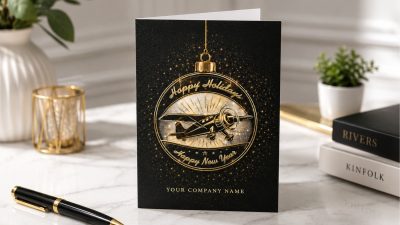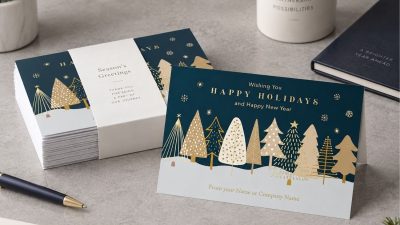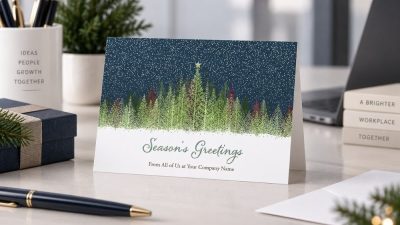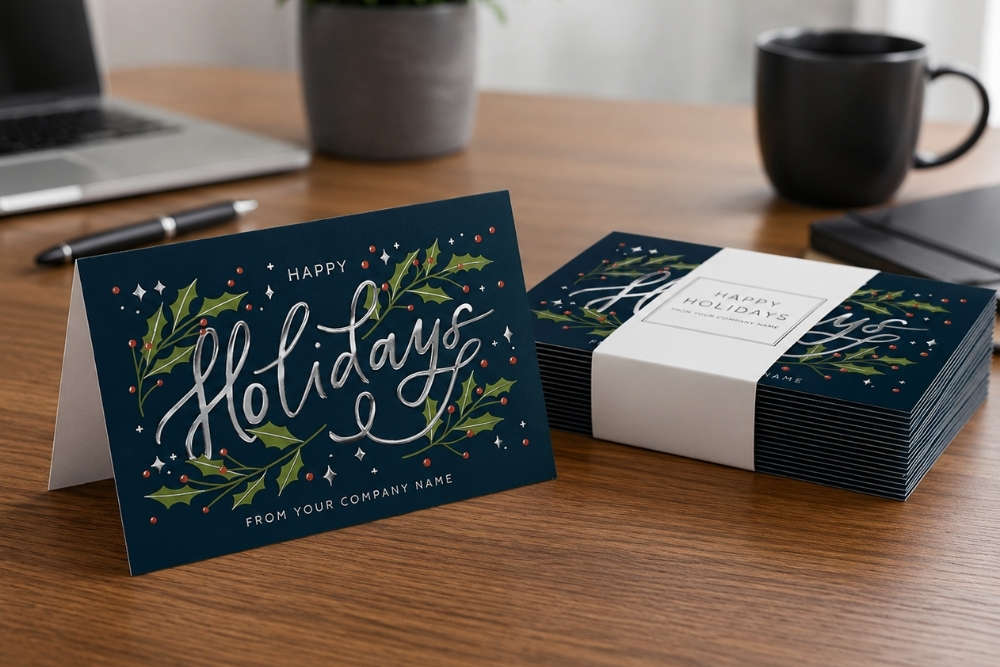
Every year, holiday cards carry your company’s name, your message, and a first impression that either sticks or gets tossed. For 2026, the design landscape has shifted noticeably. Fresh palettes, textured finishes, and cleaner layouts are replacing the overly busy, generic looks that dominated corporate mailboxes in recent years.
Whether you are ordering for a client appreciation campaign or an employee recognition mailer, knowing what looks current (and what looks dated) can make the difference between a card that sits on someone’s desk for weeks and one that goes straight into the recycling bin. Here is what is trending, what is fading, and what your business should keep in mind as you plan your holiday card strategy.
What Holiday Card Design Trends in 2026 Are Shaping Corporate Greetings?
A few clear directions are standing out in the holiday card design trends in 2026. Most of them share one thing in common: a move toward intention. Cards that feel thoughtful and crafted are replacing designs that look rushed or mass-produced.
Sculpted Embossing and Metallic Foils
Tactile finishes continue to gain ground, and in 2026, they are more popular than ever for business holiday greetings. Deep sculpted embossing, shimmering gold and silver foils, and layered textures add a dimension that flat-printed cards simply cannot match. When a recipient runs a finger over an embossed snowflake or a raised company name, the card instantly feels more intentional. Premium paper stock paired with foil accents creates a sensory experience that reinforces professionalism and attention to detail. For companies that want their card to say “we care about quality,” texture is no longer optional.
Earthy, Grounded Color Palettes
Bold reds and greens are still welcome, but 2026 is leaning hard into earthy, sophisticated tones. Deep forest greens, warm terracotta, muted slate blue, rich burgundy, and soft gold are showing up across holiday card collections. Paired with cream or ivory paper, these colors feel calm, modern, and elevated without losing seasonal warmth. For businesses across industries like finance, healthcare, real estate, and legal, earthy palettes offer a polished look that fits a wide range of brand identities.
Minimalist Layouts With Bold Typography
Clean layouts with strong typographic elements are replacing the cluttered designs of years past. A single striking font, generous white space, and one or two design elements can communicate a holiday greeting more effectively than a card packed with competing visuals. Minimalism also makes personalization stand out. When your company name, logo, or custom message occupies a clean space on the card, the branding feels prominent rather than buried.
Botanical and Nature-Inspired Artwork
Hand-drawn pine branches, eucalyptus sprigs, holly, and winter berries are showing up in holiday cards for 2026 with a refined, almost illustrative quality. Botanical elements add warmth and elegance without relying on overly literal holiday imagery. A simple wreath illustration on a textured cardstock, paired with a warm greeting inside, feels personal and sophisticated. For companies looking to send a card that resonates across cultures and celebrations, nature-inspired designs offer broad, inclusive appeal.
Personalization Beyond a Logo
One of the strongest Christmas card trends for the year is deeper customization. Adding a company logo to the front is standard, but businesses are now going further. Custom color matching, uploaded team photos, personalized sentiments written for specific audiences (clients versus employees), and signature additions all give a holiday card more authenticity. When a card feels like a personal message rather than a mass mailing, recipients remember the company behind it.
Which Christmas Card Trends Are Losing Ground in 2026?
Just as some styles are moving forward, others are falling behind. Knowing what to avoid keeps your holiday outreach looking polished and current.
Overly Generic Stock Designs
Cards that look like they could belong to any company are losing relevance quickly. Clip-art-style snowflakes, default fonts, and cookie-cutter layouts feel impersonal. In a season when your card competes with dozens of others on a client’s desk, a generic design blends into the pile instead of standing out.
Cluttered, Busy Layouts
Cards with too many competing elements, three different fonts, multiple graphics, and a lengthy printed message inside tend to overwhelm rather than impress. The shift toward minimalism means recipients now expect visual breathing room. Clean, confident design choices signal that your company knows how to communicate with clarity.
One-Size-Fits-All Messaging
Sending the same card with the same sentiment to every recipient on your list is starting to feel outdated. Companies that segment their lists and customize messaging for clients, employees, and partners create a stronger impression. Even small adjustments, like a different closing line for long-term clients versus new contacts, make a card feel more genuine.
How Do 2026 Design Trends Strengthen Your Client Relationships?
A well-chosen holiday card does more than mark the season. For businesses, the right design becomes a quiet brand touchpoint. A card crafted with premium materials and a current aesthetic tells a client that your company pays attention to detail, values the relationship, and takes professional communication seriously.
Physical cards still hold an advantage that digital greetings struggle to match. A textured, foil-stamped card with a company name embossed on the front can sit on a desk or bulletin board for weeks, keeping your brand visible long after the holiday. In a business landscape where inboxes are overflowing and digital messages disappear in seconds, a tangible card creates a moment of pause.
For HR and office management teams, holiday cards also serve an internal purpose. Sending a thoughtful card to employees shows appreciation, lifts morale, and reinforces a company culture built around recognition. When the card itself looks beautiful and feels premium, the gesture carries even more weight.
What Should You Look for When Choosing a 2026 Holiday Card?
Ordering business Christmas cards early gives you the best selection and the most time for customization. A few practical considerations can guide your choice.
Start with the finish. Cards with embossing, foil, or layered textures will land differently than a flat-printed option. Match the design to your audience. If you serve clients across industries or geographies, a non-denominational design with nature-inspired artwork or a Season’s Greetings sentiment keeps your message inclusive. Prioritize personalization. Adding your company logo, choosing a custom inside greeting, and including signatures gives every card a branded, personal feel.
Planning ahead also matters. Most businesses that send holiday cards benefit from creating the perfect corporate holiday card well before the November rush. Gallery Collection offers customizable designs across a wide range of themes, finishes, and personalization options to help you make every card count.
Frequently Asked Questions
Sculpted embossing, metallic foils, earthy color palettes, minimalist layouts, and botanical artwork are leading the way. Personalization options like custom sentiments and logo placement are also in high demand for business cards.
Absolutely. Minimalist designs with strong typography and clean layouts look polished and professional. A simpler card also allows branding elements like your company name or logo to stand out more effectively.
Ordering in summer or early fall gives you the best design selection and more time for customization. Planning early also helps avoid the last-minute rush before the November shipping deadline.
Physical cards offer a tactile experience that digital messages cannot replicate. A premium card with embossing and foil can stay visible on a desk for weeks, keeping your company top of mind with clients and employees.
Choose a current design with premium finishes, personalize the sentiment for different recipients, and add your company logo and signatures. A card that feels customized and well-crafted creates a stronger impression than a generic one.