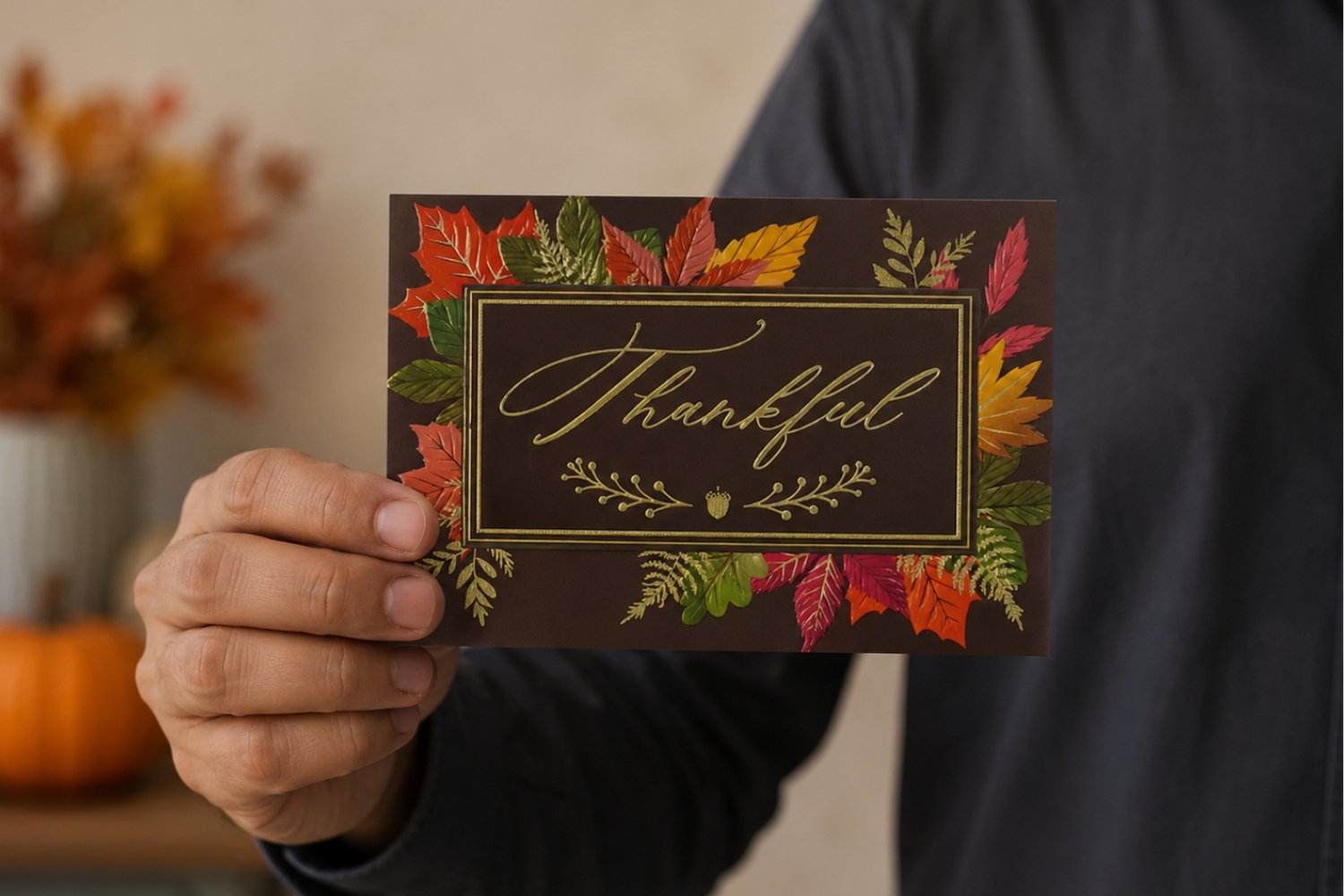
A greeting card with nothing but a printed sentiment inside is fine. But a greeting card that carries your company name, a genuine message, and a real signature? That one gets noticed. And more importantly, that one gets kept.
For businesses sending cards to clients, employees, and partners, the question is rarely whether to personalize. The real question is how. Professional imprinting, a handwritten note, or a combination of the two each brings something different to the table. Understanding when to use which approach is the difference between a card that gets a glance and one that sits on a desk for weeks.
Here is a practical guide to personalizing greeting cards in a way that fits your business, your audience, and your brand.
Why Does Personalizing Greeting Cards Matter in Business?
Every card your company sends is a reflection of your brand. When a client receives a generic, unsigned holiday card, the message is clear, and not in a good way. On the other hand, a card with the recipient’s name, a chosen sentiment, and your company logo communicates something much stronger: care, professionalism, and attention to detail.
Personalizing greeting cards turns a routine gesture into a meaningful business touchpoint. For HR teams recognizing employees, for marketing departments nurturing client relationships, and for office managers handling seasonal outreach, the level of personalization on each card directly affects how the recipient perceives the sender.
A card with professional imprinting looks polished. A card with a handwritten note feels personal. A card with both? That one makes the strongest impression. Gallery Collection has helped businesses achieve exactly that kind of impact since 1929, offering premium cards with multiple layers of customization built into the ordering process.
What Is Card Imprinting and How Does Professional Personalization Work?
Imprinting is the process of printing your company’s name, logo, chosen greeting, and signatures directly inside a card. Rather than writing everything by hand across hundreds of cards, imprinting lets you produce a consistent, branded result at scale.
At Gallery Collection, imprinting options include ink or foil personalization. Standard ink colors include red, black, green, and blue. For a more premium finish, foil imprinting is available in gold, silver, red, green, and blue. Each card’s price includes a standard greeting and two lines of personalized imprint, with additional options for logos, custom sentiments, and printed signatures.
What Can You Customize With Imprinting?
The range of customization options for greeting cards is broader than many buyers expect. Here are the most common elements businesses choose to imprint:
- Company name on the front or inside of the card
- A company logo on select designs
- A greeting chosen from a curated list of sentiments, or a fully custom greeting written in your own words
- Staff signatures printed beneath the message
- Return address on the envelope for a polished presentation
Imprinting works best when sending a large volume of cards and consistency matters. Holiday outreach to a full client list, employee birthday programs, and seasonal campaigns all benefit from a clean, professional imprinted card.
For detailed specifications on setting up a custom greeting, Gallery Collection provides a custom greeting card guidelines document to help businesses format sentiments, signatures, and logos correctly before placing an order.
When Should You Add a Handwritten Note to a Greeting Card?
Handwriting brings something that imprinting cannot: a visible, personal investment of time. When a client opens a card and sees a short note in someone’s actual handwriting, the effect is immediate. The card no longer feels like a batch job. Instead, the card feels like a one-to-one message.
Handwritten notes work best for high-value relationships and smaller send lists. A managing partner writing a personal thank-you to a top client. An HR director adds a line of encouragement inside an employee’s anniversary card. A business owner jotting a quick note of appreciation to a long-time vendor. In each of those situations, the handwritten element signals that the recipient was worth the extra effort.
A few practical tips for handwriting inside business greeting cards:
- Keep the note to one or two sentences. A short, specific comment is more effective than a long paragraph.
- Use a quality pen. Gel pens and fine-point pens work well on premium card stock without smearing.
- Address the recipient by name. Even a simple “Sarah, thank you for a great year” adds warmth that a generic message cannot match.
- Leave space around the printed sentiment so the handwritten note does not crowd the design.
The small details matter when sending a greeting card, and a handwritten note is one of the most impactful details a business can add.
How to Personalize a Greeting Card Using Imprinting and Handwriting Together
The most effective approach for many businesses combines both methods. Professional imprinting handles the branded elements, while a handwritten addition makes each card feel individual. Here is how to structure that layered personalization:
Step 1: Start With a Strong Imprinted Foundation
Choose your card design, select a greeting sentiment or write a custom one, and add your company name, logo, and printed signatures. Your imprinting should handle the professional, repeatable elements so the card looks polished the moment the envelope is opened.
Step 2: Leave Room for Handwriting
When setting up your imprint layout, leave a small section of blank space inside the card, either below the printed sentiment or along the bottom margin. The blank area gives team members room to add a personal note without conflicting with the printed design.
Step 3: Add a Brief Handwritten Message
Once cards arrive, assign someone on your team to add a short personal note to priority recipients. Even a single sentence, like “Looking forward to working together again next year,” makes the card feel intentional.
Step 4: Match Ink to the Card Design
Choose a pen color that complements the imprint color. A blue or black pen pairs well with most foil and ink choices without clashing. Avoid using a marker or pen that bleeds through premium paper stock.
Using both imprinting and handwriting together is especially powerful for holiday cards, client appreciation sends, and milestone recognition moments. The imprint carries the brand. The handwriting carries the relationship.
Which Personalization Approach Works Best for Your Business?
The right method depends on volume, audience, and occasion. Here is a quick breakdown:
- Imprinting only works well for large-volume sends like company-wide holiday mailings, seasonal campaigns, and bulk employee birthday programs. The result is consistent, professional, and efficient.
- Handwriting only suits small, high-touch sends such as thank-you cards to top clients, condolence cards, or personal notes from leadership. The result is intimate and memorable.
- Together, they are ideal for businesses that want a professional presentation at scale with a personal layer for key recipients. Many companies imprint all cards and then add handwritten notes to VIP clients and senior employees.
No matter which approach your team chooses, the goal stays the same: send a card that makes the recipient feel genuinely valued. And when that card is printed on premium paper with sculpted embossing, brilliant foil accents, and your brand identity built right in, the impression goes far beyond the message inside.
Frequently Asked Questions
Standard imprinting in ink is included in the card price. Custom greetings with a standard font cost $35, while custom greetings using a custom font cost $50. Foil imprinting is available at a small additional charge.
Yes. Order your cards with logo imprinting and a printed sentiment, then leave space inside for a handwritten message. Many businesses use both methods on the same card for maximum impact.
Ink options include red, black, green, and blue. Foil options include gold, silver, red, green, and blue, giving you flexibility to match your card design and brand colors.
Not necessarily. Many companies add handwritten notes to cards going to high-priority recipients while keeping standard imprinting for the rest of the mailing list.
A gel pen or fine-point pen in black or blue ink works well. Avoid felt-tip markers, which can bleed or smear on coated paper stock.